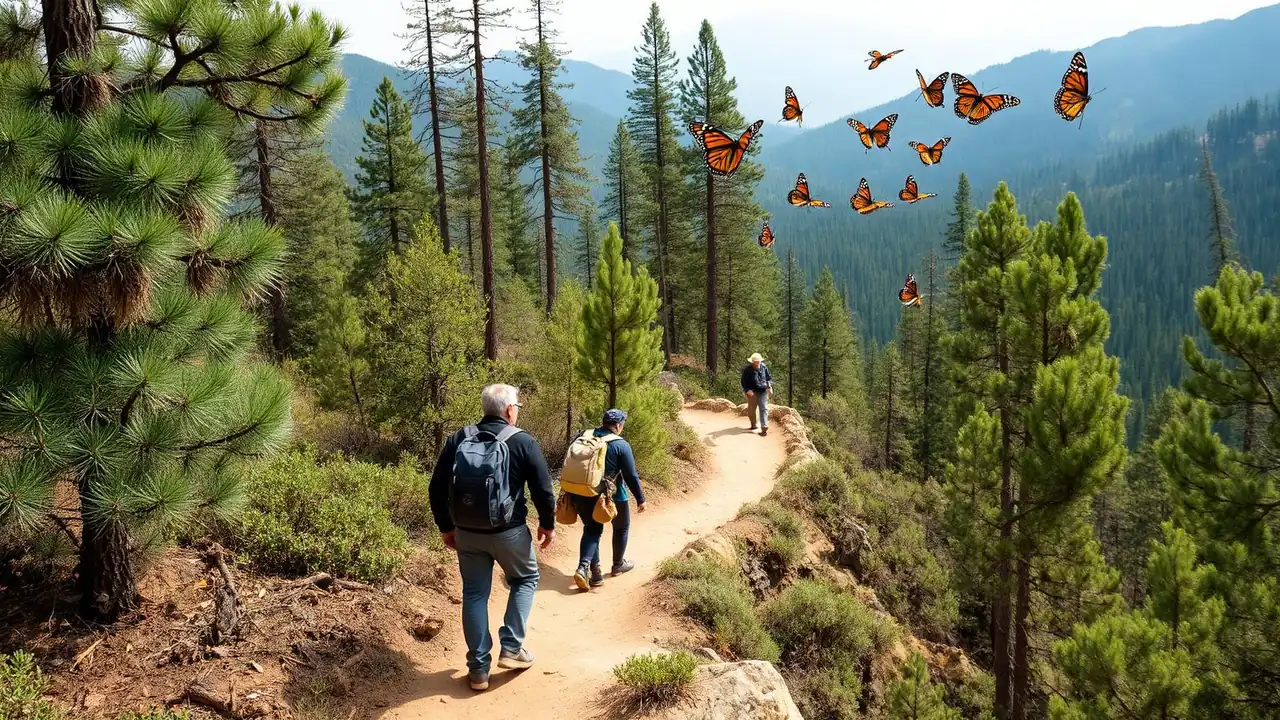
Monarch Butterfly Sanctuary: What to Expect
Terrain, hiking, weather, and what an actual Monarch sanctuary visit is like, so you can prepare before you go.
This guide is prepared by Maya Explorer Tours, a local travel team helping visitors plan Monarch Butterfly sanctuary visits around hotel pickup times, route timing, and travel style.
Reaching the Monarch overwintering colonies involves an uphill hike in high-elevation forest terrain, or at some sanctuaries an optional horseback ascent. Butterfly activity varies by weather, time of day, and colony location and is never guaranteed on any single visit — sanctuaries typically see more active flight on warmer days, roughly January through February, and tighter clustering on cooler or overcast days.
Terrain and Physical Preparation
The Monarch sanctuaries sit in high-elevation forest in the central highlands of Michoacán and the State of Mexico. Reaching the overwintering colonies means an uphill walk on forest paths; at some sanctuaries, an optional horseback ascent is available as an alternative to hiking, depending on the confirmed sanctuary and current local operation.
Travelers with altitude sensitivity or limited mobility should plan accordingly. This is a real physical-preparation matter, not just a comfort note. If this affects your trip planning, ask about it directly when requesting a quote so it can be discussed for your specific route and group.
Exact altitude and hike-distance figures for each sanctuary are not published on this site as confirmed public facts. Treat any specific meters/feet figure you see elsewhere as an estimate from a secondary source, not an official measurement, until it can be independently verified.
Weather and Wildlife Expectations
Monarch butterfly viewing is a natural, wildlife-dependent experience, not a scheduled spectacle. No tour, including this one, can promise a specific number of butterflies, a specific density of clustering, or exact weather on your visit date. What is confirmed, once your booking clears, is the sanctuary visit itself as part of your itinerary — not the natural conditions you will find there.
Warmer, sunnier days in the roughly January-to-February peak window tend to encourage more active flight. Cooler or overcast days, at any point in the season, tend to show tighter clustering in the trees instead. Both are a normal part of visiting a wild overwintering colony.
What a Visit Is Actually Like
Expect an early departure from your overnight base, a drive to the sanctuary entrance, then the uphill approach to the colony viewing area, on foot or by the optional horseback option where available. Bring layered clothing, since mornings in the high-elevation forest are noticeably cooler than the Mexico City valley floor, along with comfortable closed-toe walking shoes and water. For when in the season to plan around, see our Monarch season guide, and for how the sanctuaries compare, see our sanctuary comparison guide.
Ask About Your Specific Route
If altitude, mobility, or terrain is a concern for your group, mention it when requesting a quote so we can help plan around it.
If you want help matching this guide to your hotel, date, and group size, Maya Explorer Tours can help you compare private timing options on WhatsApp.
Related Travel Guides
Monarch Butterfly Tour Mexico
Private multi-day journey built around a confirmed sanctuary visit
Monarch Season Mexico
When sanctuaries typically open and when activity peaks
Monarch Sanctuary Comparison
El Rosario, Sierra Chincua, Senguio, and Piedra Herrada compared
Monarch Butterflies from Mexico City
Travel times, day trip vs. multi-day, and route planning
Frequently Asked Questions
Ask About Your Specific Route
If you want help applying this guide to your dates, route, or group type, message us on WhatsApp. We can help you compare options and confirm availability, no payment required to enquire.
No payment required to enquire