Chichen Itza
State or region: Yucatan
El Castillo and the Great Ball Court define a large ceremonial city with major monuments.
Broad traveler fit: First-time visitors seeking landmark scale and broad historical context.
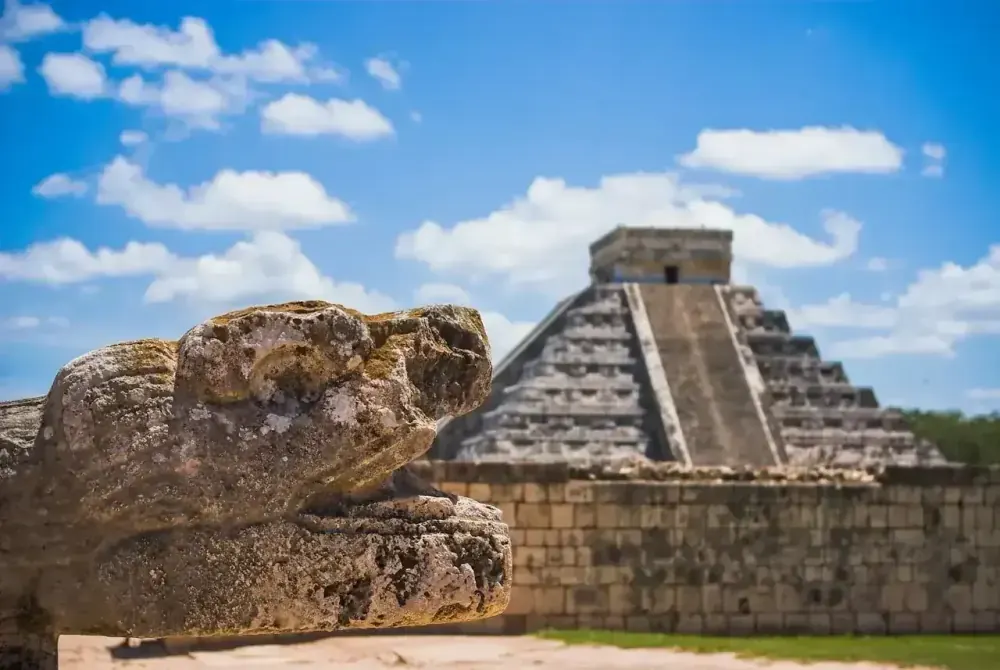
Mayan ruins in Mexico are the archaeological remains of ancient Maya cities, including pyramids, temples, palaces, ball courts, causeways, and ceremonial plazas. The best-known sites are concentrated across southeastern Mexico, especially in Yucatan, Quintana Roo, Campeche, and Chiapas.
This guide introduces the major regions and representative sites, including Chichen Itza, Tulum, Coba, Ek Balam, Uxmal, Calakmul, and Palenque. Compare the Mayan ruins Mexico is best known for, then choose a private Mayan ruins tour or an independent visit using the specialist destination, visitor, comparison, and tour links below.
The main Maya archaeological regions in Mexico extend across the southeast. Yucatan includes Chichen Itza, Ek Balam, and Uxmal. Quintana Roo includes Tulum and Coba, as well as smaller sites near the Caribbean coast and Cozumel. Campeche is home to Calakmul and other major inland cities. Chiapas includes Palenque, one of Mexico's best-known jungle archaeological sites.
Many Yucatan and Quintana Roo ruins can be visited from Cancun, the Riviera Maya, Valladolid, or Merida. Calakmul and Palenque usually require separate regional planning rather than a normal Cancun day trip. Plan the remote site with the Calakmul guide.
Travelers searching for Mayan ruins near Cancun are usually choosing between four sites in the Yucatan Peninsula. Approximate one-way driving times from the Cancun hotel zone:
Uxmal sits in western Yucatan and is far more practical from Merida than from Cancun, while Calakmul (Campeche) and Palenque (Chiapas) need their own multi-day itinerary rather than a Cancun day trip.
These representative sites show how architecture, landscape, and practical travel differ across southeastern Mexico. Use the table and cards to compare the Mayan ruins Mexico travelers ask about most, then open the site guide or the matching Mayan ruins tour.
State or region: Yucatan
El Castillo and the Great Ball Court define a large ceremonial city with major monuments.
Broad traveler fit: First-time visitors seeking landmark scale and broad historical context.
State or region: Quintana Roo
A compact walled Maya city stands on cliffs above the Caribbean Sea.
Broad traveler fit: Travelers seeking a coastal setting and a shorter archaeological visit.
State or region: Quintana Roo
Raised stone causeways connect structures spread through a forested landscape.
Broad traveler fit: Travelers interested in a jungle setting and longer walking routes.
State or region: Yucatan
The Acropolis preserves detailed stucco decoration around a royal tomb.
Broad traveler fit: Travelers seeking quieter archaeology near Valladolid.
State or region: Yucatan
Puuc architecture features geometric stone mosaics and the rounded Pyramid of the Magician.
Broad traveler fit: Travelers based in Merida who value architecture and a slower visit.
State or region: Campeche
A vast Maya city with major pyramids rises inside a tropical forest reserve.
Broad traveler fit: Travelers prepared for remote jungle archaeology and separate regional planning.
State or region: Chiapas
Temple inscriptions and palace architecture occupy a forested foothill setting.
Broad traveler fit: Travelers planning a dedicated Chiapas journey rather than a Cancun day trip.
Choose at a high level by setting and route, then use a specialist comparison for detailed decisions.
Official government admission for the five most-visited sites, with the federal and state portions shown separately so you can see what you are actually paying at the gate.
| Site | Foreign adult | Mexican national | Hours | Drive from Cancun | Worth knowing |
|---|---|---|---|---|---|
| Chichen Itza | 697 MXNINAH 105 + state 592 MXN | 310 MXN | 08:00 - 17:00last entry 16:00 | about 2 h 20 min | Since 2026 the federal and state portions are sold as one single ticket at the entrance, so you pay once instead of queueing twice. |
| Ek Balam | 691 MXNINAH 210 + state 481 MXN | 237 MXN | 08:00 - 17:00last entry 16:00 | about 2 h 15 min | Parking is a separate 100 MXN ejido access charge. The main Acropolis is still climbable. |
| Uxmal | 566 MXNINAH 105 + state 461 MXN | 262 MXN | 08:00 - 16:00last entry 15:00 | about 4 h 30 min | Far from the Caribbean coast; realistic as a Merida day trip or inside a multi-day Yucatan itinerary. |
| Coba | 210 MXNINAH 210 MXN only | 105 MXN | 08:00 - 17:00last entry 16:00 | about 1 h 45 min | Nohoch Mul climbing access closes at 15:30, is capped at 15 people per group and limited to about 15 minutes at the top. |
| Tulum | 515 MXNINAH 210 + state 305 MXN | 310 MXN | 08:00 - 17:00last entry 15:30 | about 1 h 30 min | Admission is collected as one combined INAH + CONANP charge inside Parque del Jaguar. |
Government fees and hours can change. Figures verified against official INAH and state sources in August 2026; confirm before you travel.
Both approaches work when they match your hotel base, transport, and preferred pace.
A guided or private visit can combine hotel pickup, a private vehicle, historical interpretation, and flexible pacing. This approach is useful for families and groups that prefer coordinated logistics, but it is not necessary for every traveler.
An independent visit works well when you have suitable transport and want to set your own schedule. Check the current entrance-fees overview and the individual Tulum, Coba, or Uxmal visitor guide before travel, because tickets, hours, and access rules may change. entrance-fees overview, Tulum visitor guide, Coba visitor guide, Uxmal visitor guide, Izamal visitor guide.
Basing in the colonial cities changes the drive time, so compare the options in our Merida day trips guide · Valladolid day trip.
Three representative private tours provide an iconic site, a jungle and wildlife combination, or a coastal ruins and cenote day. Every Mayan ruins tour here runs privately for your party, with a private guide, a private vehicle, and flexible planning for the group.
Request a private quote
Your hotel base affects drive time and practical site choice. Use the departure pages for available tours and the comparison guide for detailed site selection.
Tours from Cancun · Tours from Playa del Carmen · Tours from Tulum · Tours from the Riviera Maya · Tours from Merida · Mayan ruins comparison
Prepare for the climate and route without relying on changeable access details.
The main Mayan ruins in Mexico are in the southeast, especially in Yucatan, Quintana Roo, Campeche, and Chiapas. These regions include coastal, inland, and jungle archaeological sites.
Mayan ruins are the archaeological remains of ancient Maya cities. They include pyramids, temples, palaces, ball courts, causeways, homes, and ceremonial plazas.
Chichen Itza, Tulum, Coba, Ek Balam, Uxmal, Calakmul, and Palenque are among Mexico's best-known Maya archaeological sites. A specialist comparison can help match the Yucatan Peninsula sites to a travel route.
No. Major Maya sites in Mexico extend beyond Yucatan into Quintana Roo, Campeche, and Chiapas, while the wider Maya civilization also covered parts of Central America.
Maya cities in Mexico developed across many centuries, and their surviving buildings come from different periods. Many famous monuments were built during the Classic and Postclassic eras, so each specialist site guide gives more useful historical context than one date for every ruin.
Tulum and Coba are practical from many Riviera Maya hotels, while Chichen Itza and Ek Balam suit longer day trips from several coastal bases. Uxmal is generally more practical from Merida, and exact travel time depends on the hotel location.
Calakmul in Campeche and Palenque in Chiapas usually require separate regional planning. They are not normal Cancun day trips and suit travelers building a dedicated inland or southern Mexico itinerary.
Major archaeological sites in Mexico are established visitor destinations, but travelers should review current regional advice and site rules before travel. Heat, sun exposure, dehydration, uneven paths, and long road journeys also require practical preparation.
Send your hotel or pickup city, travel date, group size, and the sites you want on WhatsApp. Because we operate the tours ourselves, the reply confirms the vehicle, the pickup window for your area, and the current per-group price with no prepaid voucher. Long routes such as Chichen Itza, Ek Balam, and Uxmal use the earliest pickups.
A private Mayan ruins tour runs with your party only, normally up to 10 travelers in one vehicle, and larger groups are quoted with an additional vehicle. Cancellation terms are confirmed with your quote; most private ruins tours allow free cancellation up to 48 hours before pickup.
Some Yucatan Peninsula itineraries combine archaeology with a swim. Explore suitable stops in the cenotes guide.
Message us on WhatsApp to get a fast, personalized quote — no commitment required.
One Mexico operations team
Maya Explorer Tours coordinates private and premium travel across Mexico with local guides, drivers, activity operators, and accommodation partners.
Share your dates, hotel, group size, and priorities. The team checks real availability and confirms the right format before you book.
Explore cultural and sightseeing tours, archaeological sites, cenotes, wildlife experiences, island trips, snorkeling, and shore excursions. Private boats, sailing catamarans, charters, day trips, and custom multi-day journeys are also available.
The team can help coordinate hotels, resorts, and other accommodation. Your stay can then connect with airport or hotel transfers, private transportation, activities, and a practical day-by-day itinerary.